Triage
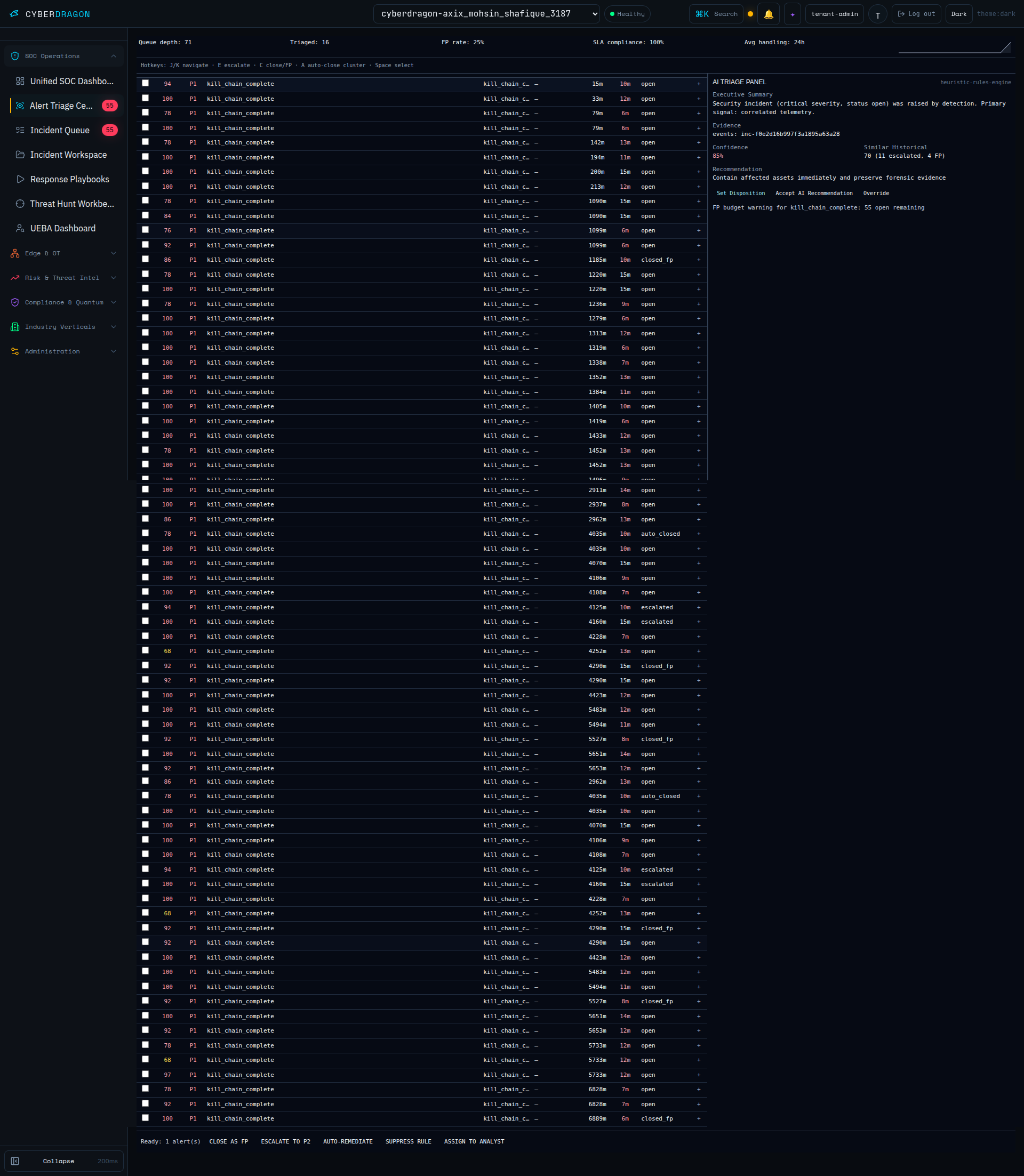
Alert Triage Center
- AI-assisted queue with confidence, not a wall of undifferentiated pages.
- Close FP, escalate, assign — hotkeys for the L1 shift.
- Enterprise→OT pivots are first-class.
CyberDragon correlates across three cascading windows so slow intrusions and fast bursts land in the same incident — with the Enterprise→OT pivot called out explicitly.
Burst correlation — brute force, scanning, and rapid recon across enterprise and OT sensors.
Lateral movement and engineering-workstation pivots that stitch enterprise identity abuse to OT sessions.
Slow APT dwell — staged persistence, C2 beaconing, and pre-positioning before an OT action.
Triage
| Tactic | enterprise behavior | OT behavior |
|---|---|---|
| Reconnaissance | Network and identity enumeration | Modbus function-code sweeps, device fingerprinting |
| Initial Access | Phishing, exposed remote services | Vendor VPN and engineering workstation entry |
| Lateral Movement | Credential reuse, remote services | Enterprise→OT pivot across the industrial DMZ |
| Collection | Data staging | OPC-UA tag harvesting, historian scraping |
| Impair Process Control | — | Unauthorized Modbus writes, DNP3 control commands |
| Impact | Ransomware deployment | Loss of view, loss of control, production downtime |
Queue
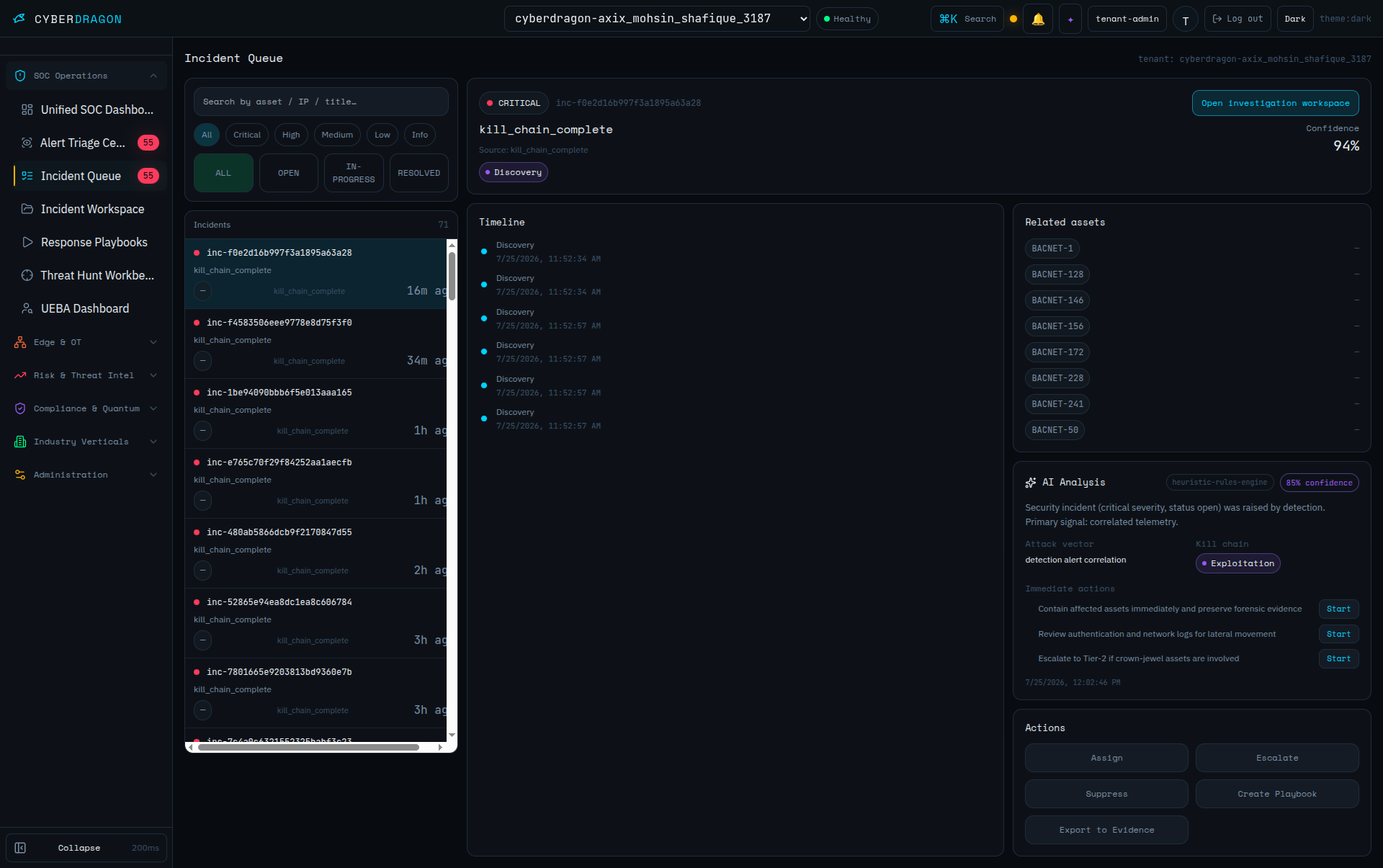
Workspace
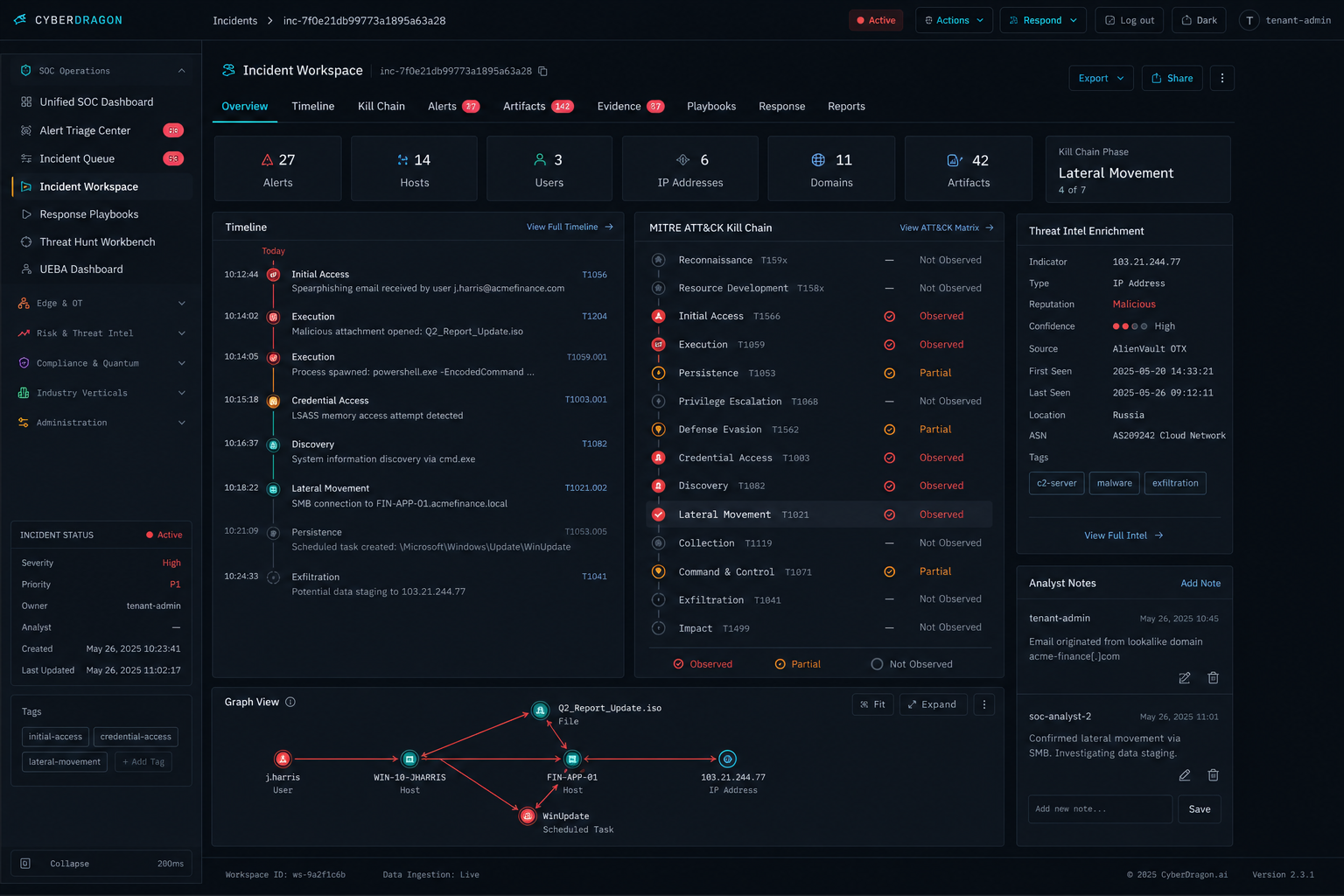
Repeated failed authentications followed by a success land inside the W15 burst window.
The source address matches a C2 indicator in the fused corpus, raising the confidence score in flight.
A remote session to an L3 host joins the same chain through the W60 lateral-movement window.
Edge reports an unexpected Modbus write to a protected register from that host.
The incident is explicitly labelled an Enterprise→OT pivot so SOC and plant engineering read one story.
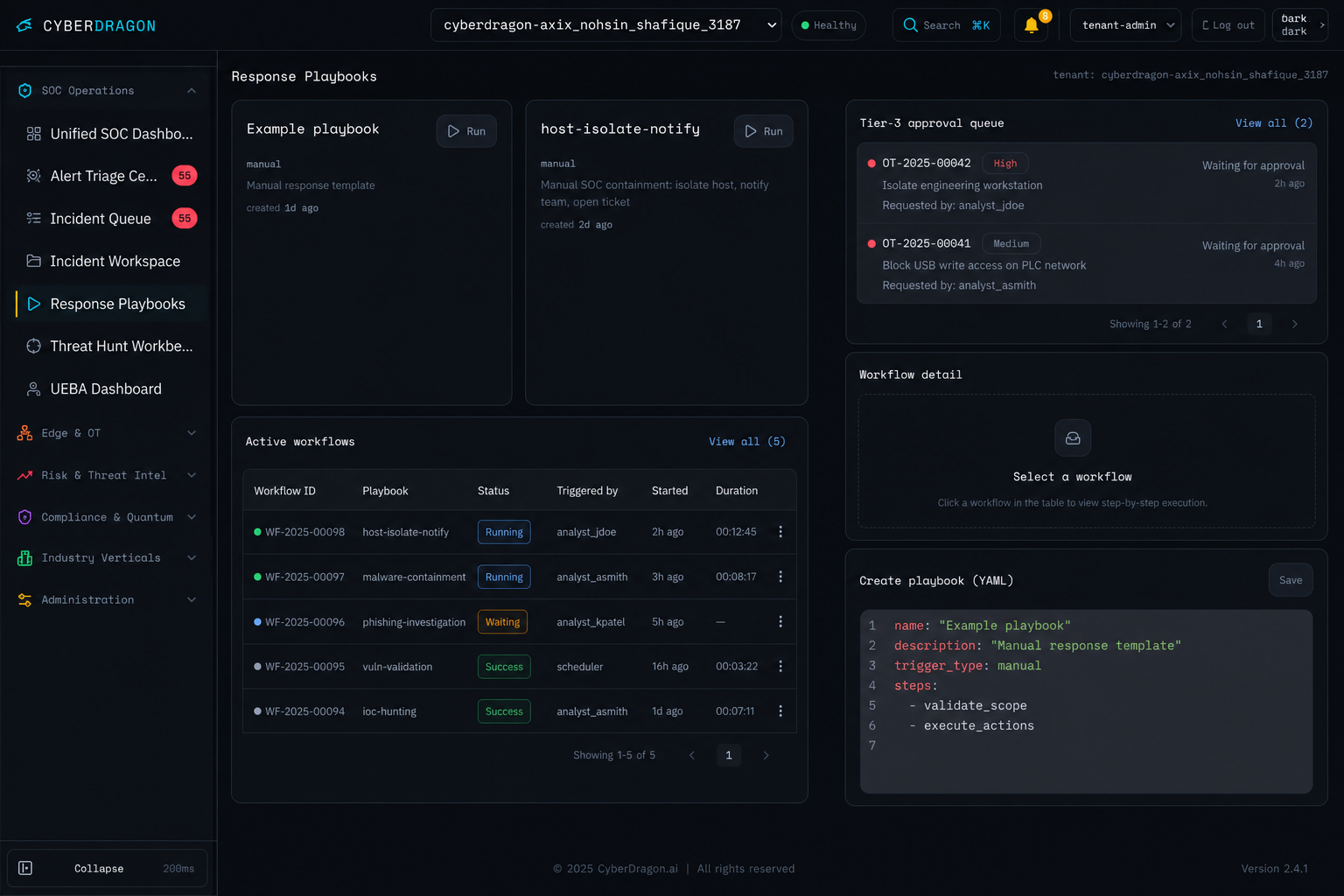
The playbook proposes containment; OPA evaluates the OT action class independently before anything executes.
Detections, the analyst decision, and the policy verdict are hash-chained into the evidence vault.
SOAR
A dedicated CyberDragon tenant on your own traffic — not a slide deck. See kill-chain cyber defense on your network.